
The government is planning to create a public register of approved insulation installers to clean up the scandal-hit retrofit market.
Under plans unveiled for consultation yesterday by the Department for Energy Security and Net Zero (DESNZ), ministers will seek powers to ban installers from working on government schemes if they don’t meet high standards.
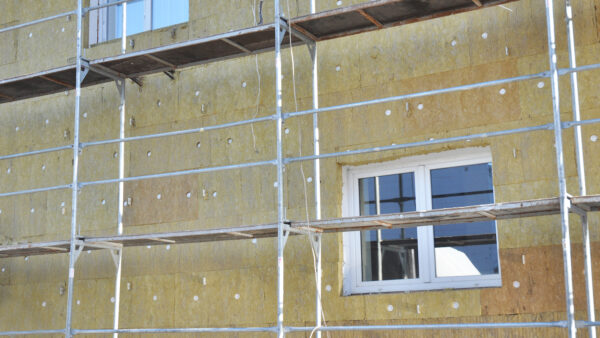
This and other moves come after a damning report from the National Audit Office late last year, which found that 98% of homes – 23,000 – with external wall insulation fitted under the Energy Company Obligation (ECO) scheme had major issues requiring fixing.
Ministers also want a single advice and support service covering the entire period during which a home is being upgraded. It aims to simplify the process for consumers with end-to-end support, quality checks and routes to redress.
Supporting the push will be a new digital system that spots poor installer practice earlier.
The idea is to ensure that widespread failures under previous schemes are never allowed to happen again.
New powers given to the Energy Ombudsman are intended to help people resolve disputes with energy suppliers faster. If companies don’t resolve issues directly, customers will be able to escalate their complaints to the Ombudsman and get a decision within 10 weeks at most – cutting a month off the previous process.
The Ombudsman will be able to fine companies if they don’t comply with its ruling, and the route for consumers to go through the courts to hold suppliers to account will be clarified.
‘A broken system’
“This government inherited a broken system that left too many people in homes damaged by work that lacked clear oversight, without support when things went wrong,” said Martin McCluskey, minister for energy consumers.
“That is why we promised to change that system, and today we are setting out how we propose to do that.
“We are building a system that puts consumers first – holding companies to account while introducing better compensation and protections for customers.”
More financial support
Also starting now, the Installation Assurance Authority (IAA) will cover the cost of repairs to Energy Company Obligation 4 (ECO4) and Great British Insulation Scheme (GBIS) solid wall insulation up to £25,000 – previously £20,000 – where these are within the terms of the original, still-valid guarantee. This includes cases where the original installer has gone bust.
The National Energy Foundation, a domestic energy charity, will also cover the cost of relevant repairs for some homes with defective ECO4 and GBIS solid wall insulation, where the installer has gone out of business and the guarantee was cancelled, fraudulent or missing.
Since identifying issues with poor-quality solid-wall insulation installed under ECO4 and GBIS, the government has set up an onsite programme offering audits at no cost to consumers.
It has remediated more than 60% of the issues identified with audits and worked with Ofgem to create a call centre for affected households.
‘Biggest investment in warm homes’
DESNZ frames its efforts as “the biggest investment in warm homes in British history”.
Other actions include making plug-in solar available in shops, giving homeowners living in properties heated by oil and LPG £9,000 off the cost of a heat pump, and delinking electricity prices from international gas prices.
Brian Berry, chief executive of the Federation of Master Builders and a member of the Retrofit System Reform Advisory Panel, welcomed the extra scrutiny on installers.
“The retrofit market is a confusing landscape for both consumers and trades,” he said.
“The government’s proposals to improve consumer protection are a welcome step forward, most notably the consideration to make more trades and related occupations subject to more government oversight.
“Greater oversight will offer the best protection to consumers and help drive out incompetent installers.”
The post Insulation installers must be registered under retrofit reform plans appeared first on Construction Management.